
The Focus
Lock-ups have become increasingly complex, especially in tech IPOs, with Meta’s five level lock-up after its 2012 IPO seeming quite simple now compared to the 11 level lock-up imposed after the Cerebras Systems IPO earlier this year or the mammoth 17 level lock-up designed for the megacap SpaceX listing. How did the lock-up, a deal feature quite steady and predictable, become so complex?
The Calendar
Looking at CMG’s lock-up breakdown for SpaceX, last week a large tranche of pre-IPO investors became free to sell stock after the first earnings release, although an additional conditional lock-up was not triggered. This lock-up expiry is the equivalent of up to 7% of outstanding shares, more than was sold at IPO.
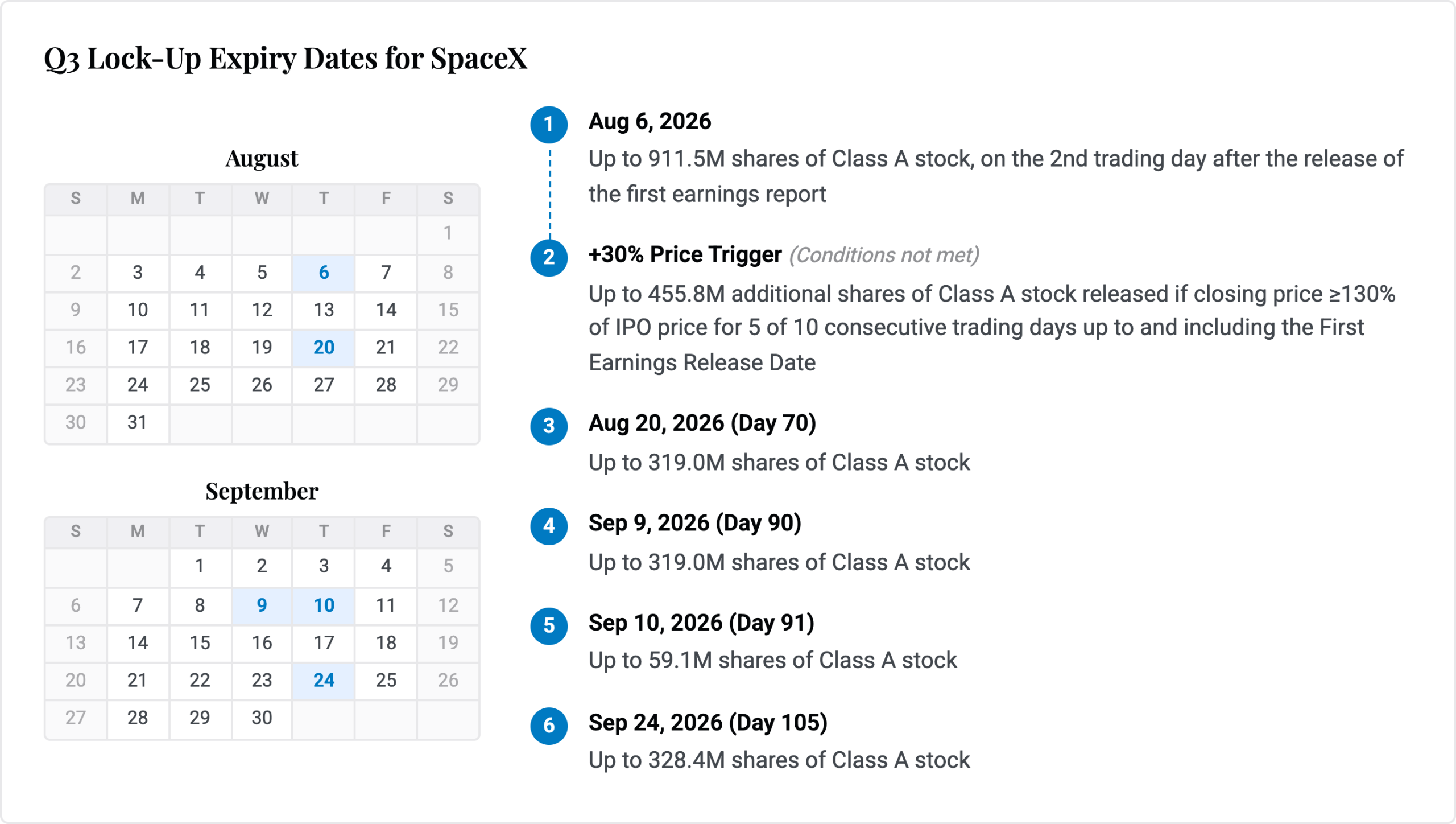
The Breakdown
Meta was not the first IPO to use a staggered lock-up but it popularized it as a mechanism to spread out shares released onto the market. The larger the IPO, the larger the looming overhang from the traditional 180-day lock-up. The tiered lock-up structure is intended to create a staggered release schedule to gradually expand the public float. Since then, the trend of companies growing on private capital and listing when larger, combined with control concentrated through dual class share structures, has also meant founders with more power to dictate the terms of their IPO.
Founders want more flexible lock-ups that allow employees and early investors a quicker route to market, and their investors are unlikely to disagree with the notion. This has all combined to evolve the traditional 180-day lock-up and the concept of multiple and conditional lock-ups has taken hold. IPOs such as Airbnb in 2020 then solidified this approach for large cap, high-growth tech companies.
In the same vein, this challenge to traditional market dynamics also saw the introduction and take up of direct listings such as Slack and Coinbase, which had no lock-ups and allowed employees and shareholders to trade their shares from Day 1.
The hot equity market during 2021 and 2022 saw an uptick in early release conditional lock-ups. Often linked to initially strong share price performance, sometimes triggered as soon as one week after the IPO, allowing shareholders clamouring for liquidity to access the market even quicker. This trend has continued, by CMG data, nearly 20% of US IPOs* in 2025 utilised either a conditional or multiple lock-up structure.
