

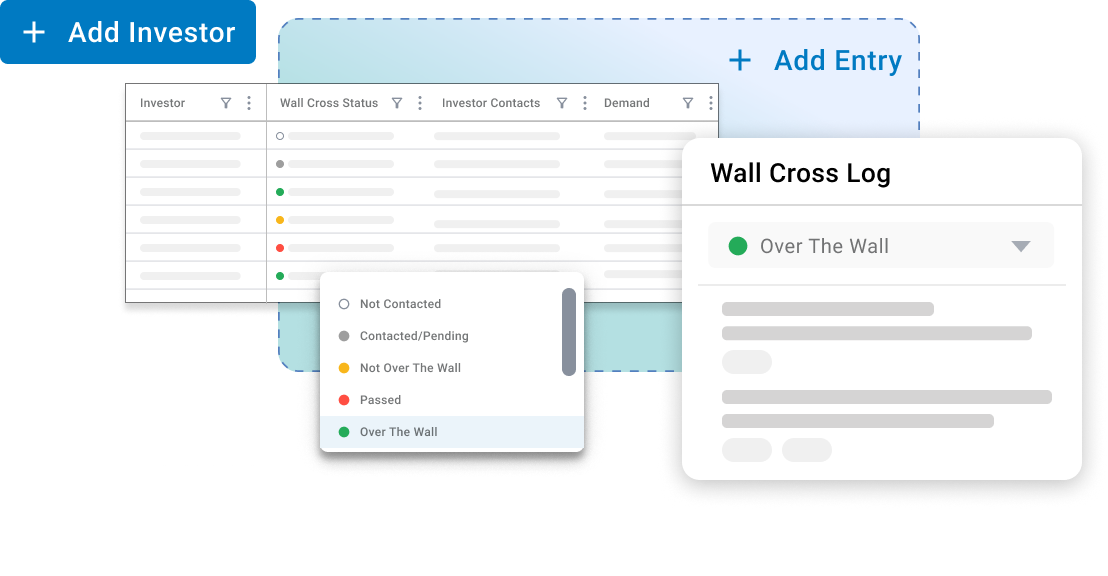
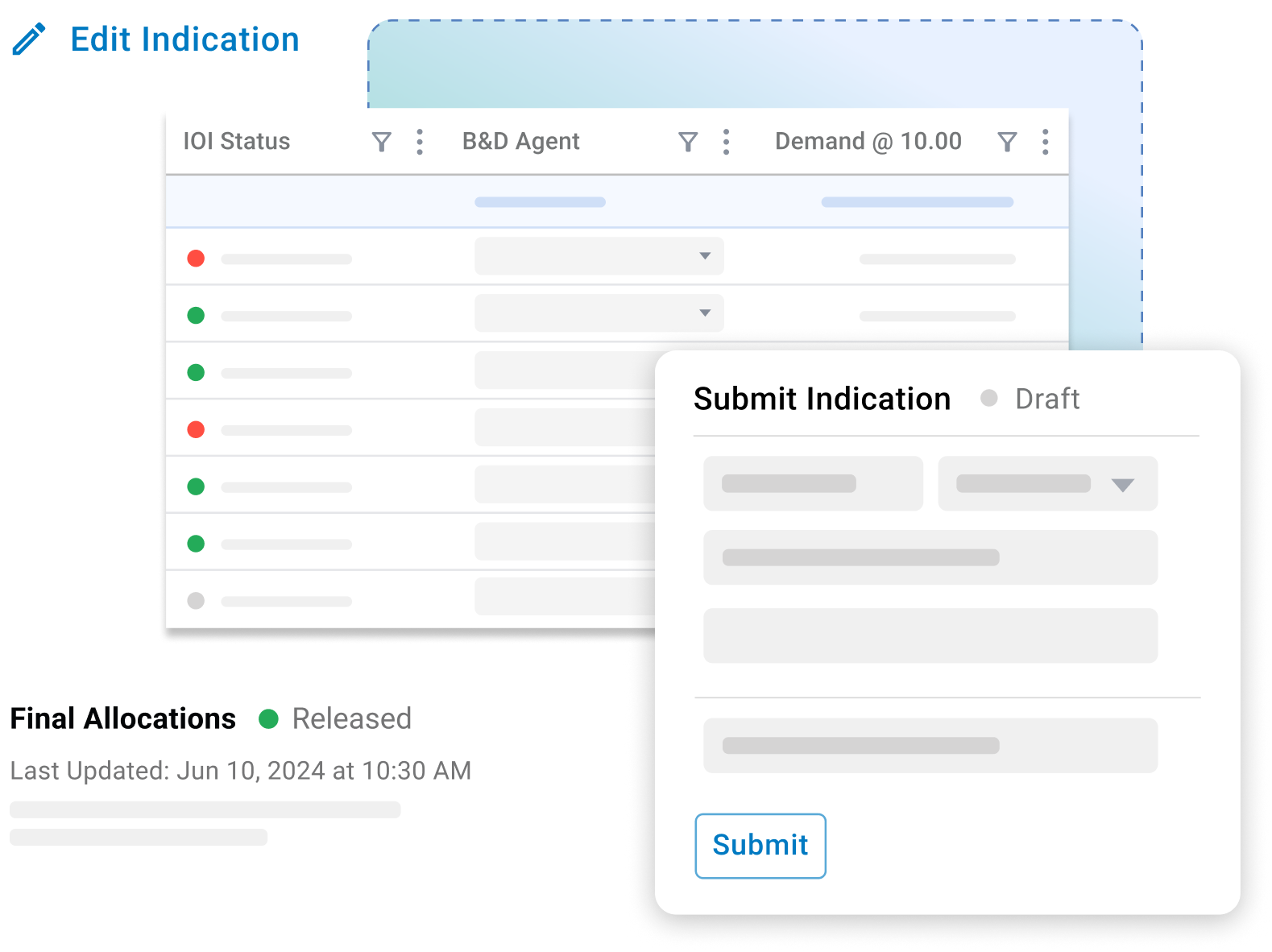



CMG XC supports the full ECM deal lifecycle on a single platform. Sell-side firms can set up offerings and publish term sheets via the web platform or REST API, manage a consolidated and de-duplicated order book, draft and distribute allocations, calculate designations and release trades and sales credits to downstream systems.
Real-time event notifications are delivered via EventHub, enabling STP integration with internal trade processing and OMS platforms. The platform is accessible via the web app and REST API.
CMG XC replaces the “bookswapping” process with a real-time shared order book accessible to all entitled syndicate participants. Buy-side firms submit IOIs directly through the platform and allocations and updates flow back in real time, removing the email chains and file transfers typical of manual book building.
CMG’s investor matching engine standardizes investor identity across counterparties, reducing the duplicate entries that accumulate when books are reconciled manually.
Yes. CMG XC supports STP with sell-side middle office systems and buy-side OMS platforms. Allocations can be released and consumed electronically via the REST API, reducing manual entry across systems.
Real-time event notifications via EventHub connect platform events such as trade release, allocation updates and attestation status changes directly into internal workflows.
CMG XC supports IPOs, follow-ons, blocks, and convertible bond transactions (144A and SEC registered).
CMG XC connects into deal workflows via:
CMG XC is expanding globally! The first phase of expansion is focused on the Americas, followed by EMEA and then APAC. Contact us for the latest on availability in your region.
CMG XC embeds investor compliance directly into the deal workflow. CMG’s Certificate Library allows sell-side firms to manage eligibility certificates across their investor population. Supported certificates types include FINRA Rules 5130/5131, Rule 144A QIB and Regulation S.
CMG XC maintains a full audit trail across every stage of the deal workflow, from offering launch through allocation and trade release. Role-based access controls create a clear record of who took which action at each stage.